
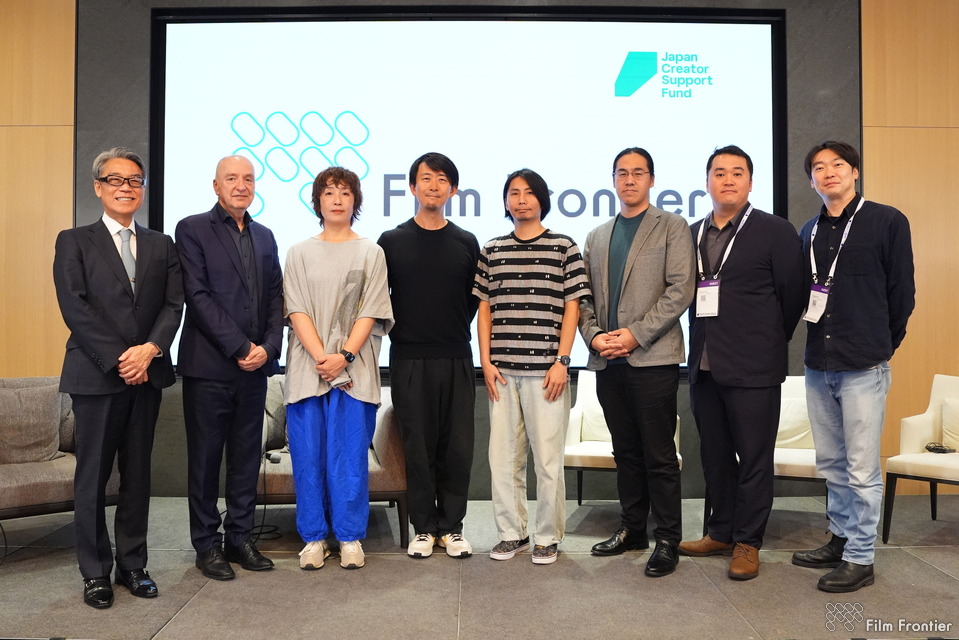






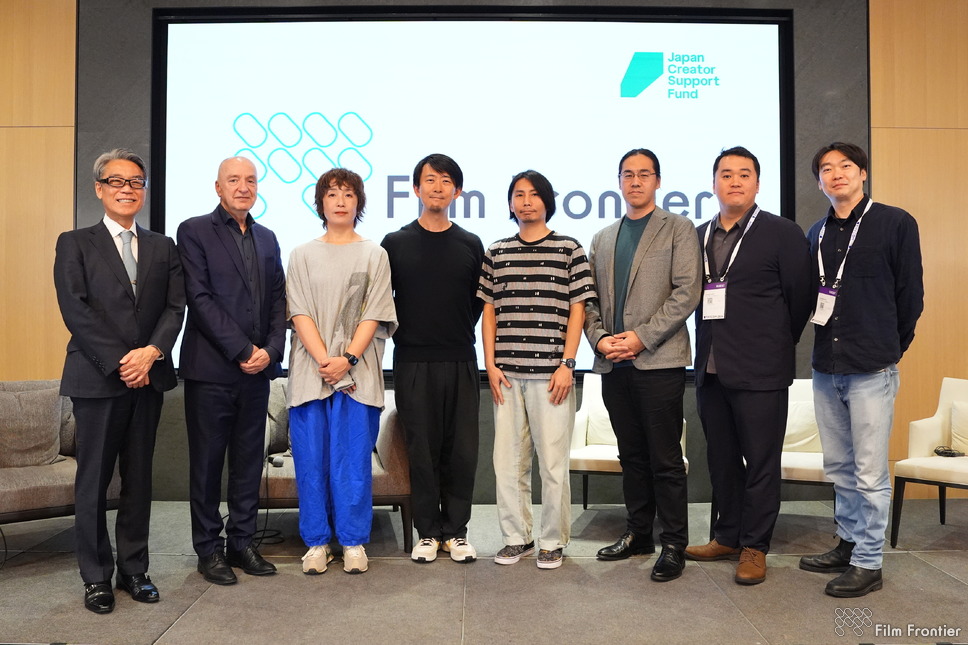
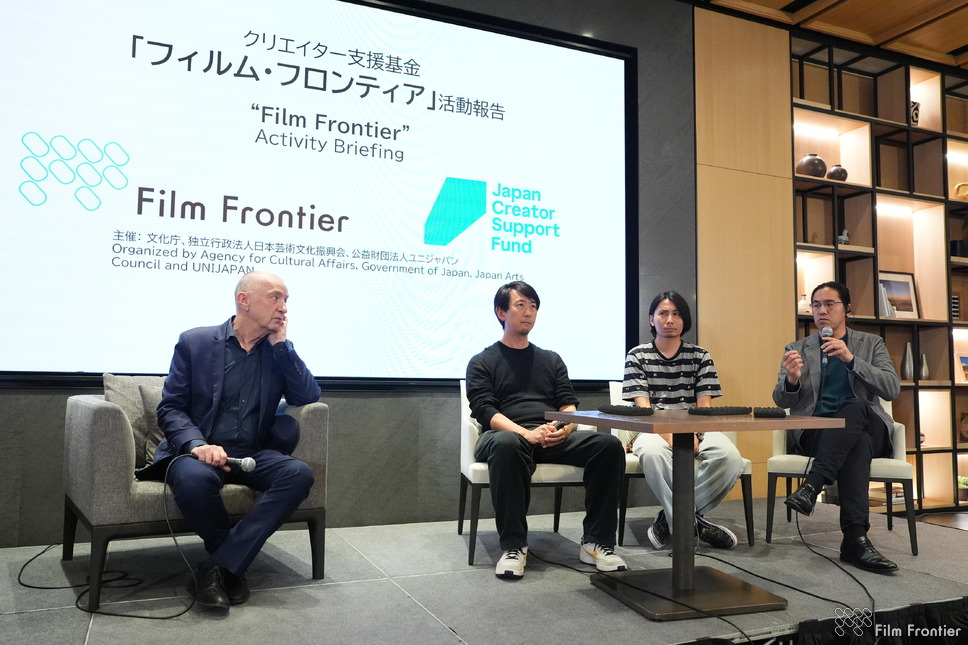
The progress report session for "Film Frontier," a multi-year program under the Creator Support Fund supporting emerging Japanese filmmakers expanding their work overseas, was held at Lexus Meets... in Hibiya, Tokyo on October 30, 2026, amid the 39th Tokyo International Film Festival(TIFF).
The event featured Film Frontier's supervising advisors, Shozo Ichiyama, Programming Director of the Tokyo International Film Festival, and Shinichiro Inoue, Former President and CEO of Kadokawa Shoten Co., Ltd., as well as guest speaker Christian Jeune, Deputy General Delegate and Director of the Film Department at the Festival de Cannes. Participants in the program's Global Networking Program, Residency Program, and Feature Anime Creators in Progress strands also took the stage to share updates on their activities.
Opening Remarks from the Agency for Cultural Affairs
The session opened with remarks by Jun-ya Tamura, Senior Specialist for Arts and Culture at the Agency for Cultural Affairs, Government of Japan.
Tamura noted that the Japanese government has designated the content industry as one of 17 strategic fields expected to drive the nation's economic growth, and is actively promoting its overseas expansion and international competitiveness. At the same time, he emphasized the importance of recognizing and preserving cinema's value as an art form.
He also highlighted Japan became an official member of AFAN this year. “We will deepen our ties with countries and regions across Asia and expand opportunities for young creators to learn from one another and grow together across borders,” he said. AFAN Executive Director Lorna Tee was also in attendance and expressed her support for this vision.
Multiple Trips Abroad Drive Project Development Forward
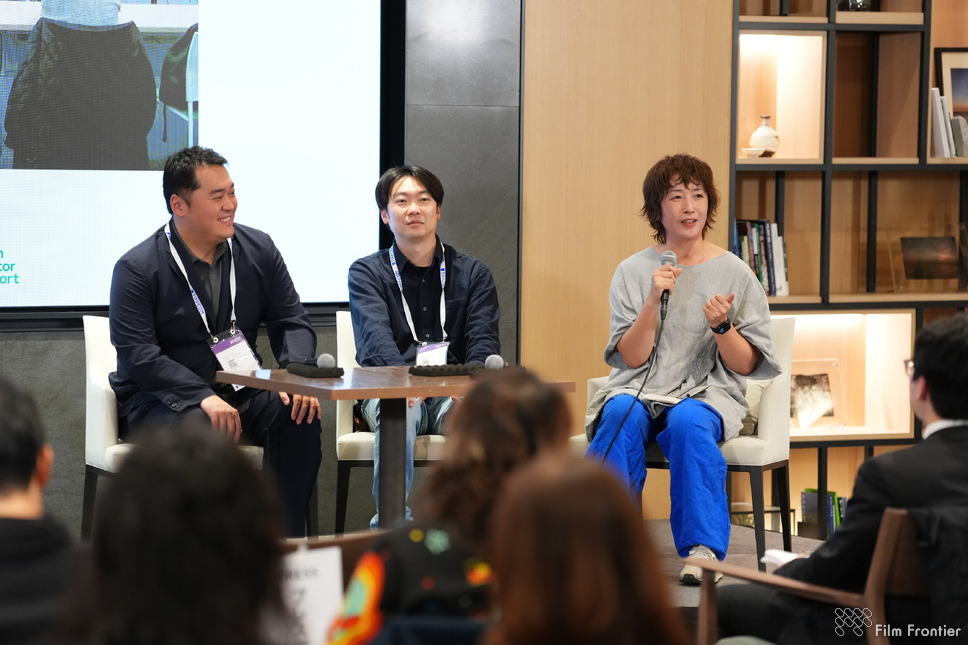
Presenting on behalf of the program participants, producer Hiroyuki Yoshihara, a member of the Global Networking Program (Cohort 2), reported on the progress of a project he is developing with director Jeong Jin-young.
Through participation in Focus Asia in Udine, Italy, the Producers Network at the Marché du Film in Cannes, and AFAN's boot camp for young filmmakers in Manila, they secured European co-producers and received valuable advice from several mentors. They explained that Film Frontier's support has enabled them to travel abroad regularly, helping the project move steadily forward.
Director Tsubomi Yamashita presented her activities under the Residency Program. Last year, she spent three weeks in France, where she engaged in in-depth creative discussions on the spirituality of haiku and poetry, as well as the tensions between gender roles and creative work. This year, she participated in a lab at the International Film Festival Rotterdam in the Netherlands.
She also attended a case study session led by Keisuke Konishi, producer and Executive Vice President of Happinet Media Marketing Inc., who serves as an advisor to the Residency Program. She said the session gave her fresh insight into the wide-ranging role of a producer, particularly the complex yet essential processes involved in international co-production.
Guest advisor Christian Jeune remarked that young Japanese filmmakers have been making increasingly strong inroads into the international arena since the COVID-19 pandemic, and that Japan's long-established film industry is once again gaining momentum. Having attended Film Frontier's presentation for the third time, he said he could sense this growing energy and expressed his hope that the participants' efforts would come to fruition over the next two to three years.
Animation Gains Ground at International Film Festivals
Regarding the Feature Anime Creators in Progress strand, supervising advisor Shinichiro Inoue noted that animation takes considerably longer to produce than live-action films and that the industry had relatively little experience with international collaboration. As a result, the strand initially had to find its own way forward, drawing on advice and guidance from various sources. He said he was delighted to see that each project was now beginning to achieve tangible results.
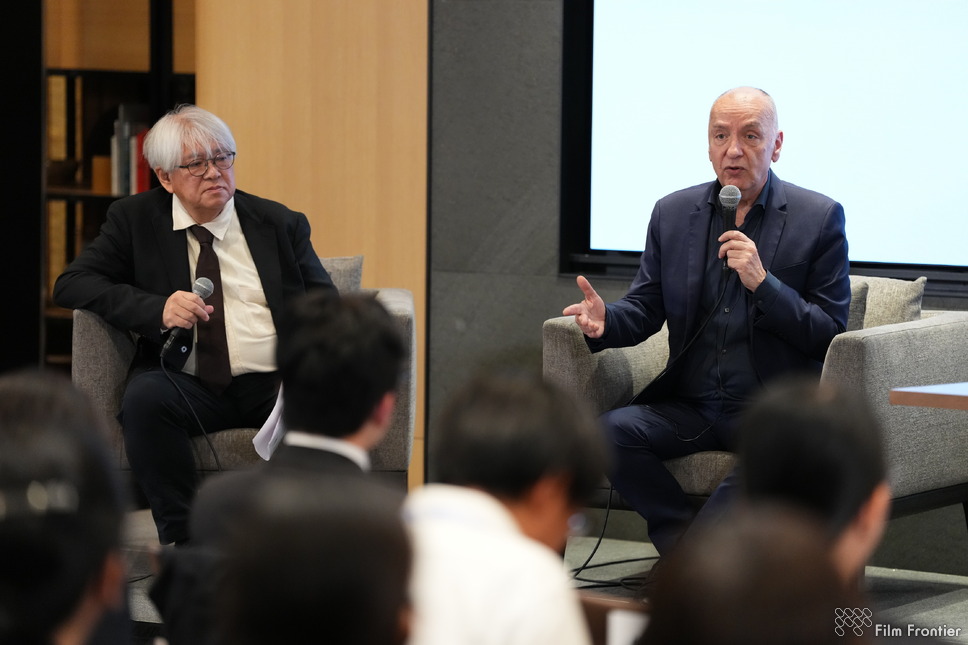
Christian Jeune added that animation had once been far from the mainstream at the Festival de Cannes, but its footprint has expanded significantly in recent years, blurring the line between animation and live-action. With the growing commercial success of animation, the festival now receives a large number of animated film submissions. This year, more than 4,000 films were submitted for just 10 slots in the short film competition, three of which went to animated films. He observed that animation had undoubtedly entered the spotlight, underscoring his realization of how the genre had captured industry’s attention.
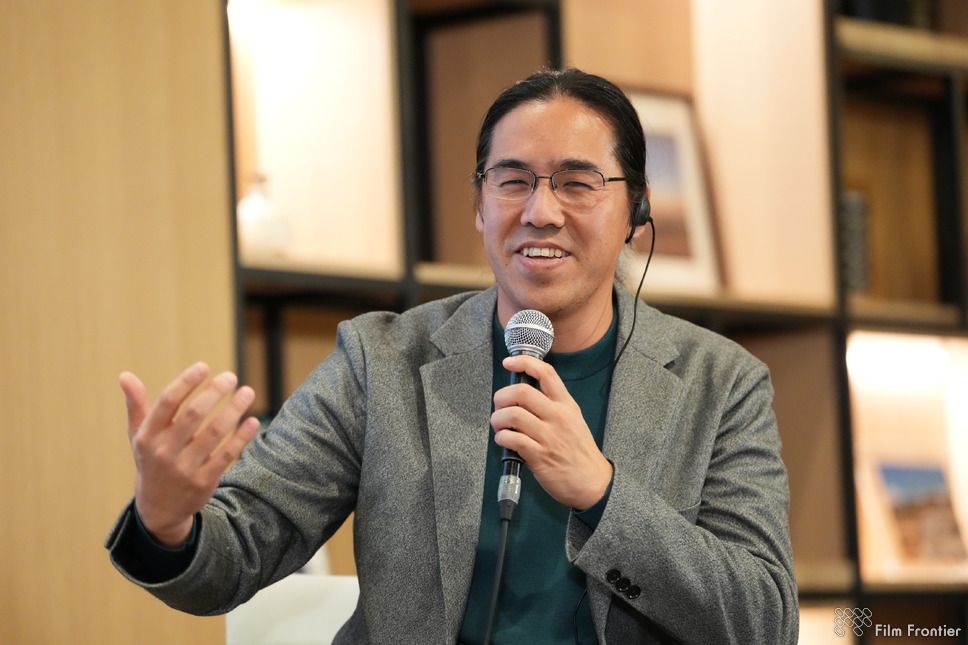
Director Yoshitoshi Shinomiya, a director of "A New Dawn" and a participant in the Feature Anime Creators in Progress strand, has long believed that domestic landscapes and themes can deeply resonate with audiences worldwide. Following a successful collaboration with a French production company, his first feature-length film, A New Dawn, was selected for the Competition section at the Berlin International Film Festival. Reflecting on his first time attending an international film festival, he recalled his initial sense of bewilderment and the stark differences he observed between domestic and overseas audience reactions. The film's Jury Award in the Contrechamp section at the Annecy International Animation Film Festival was also highlighted.
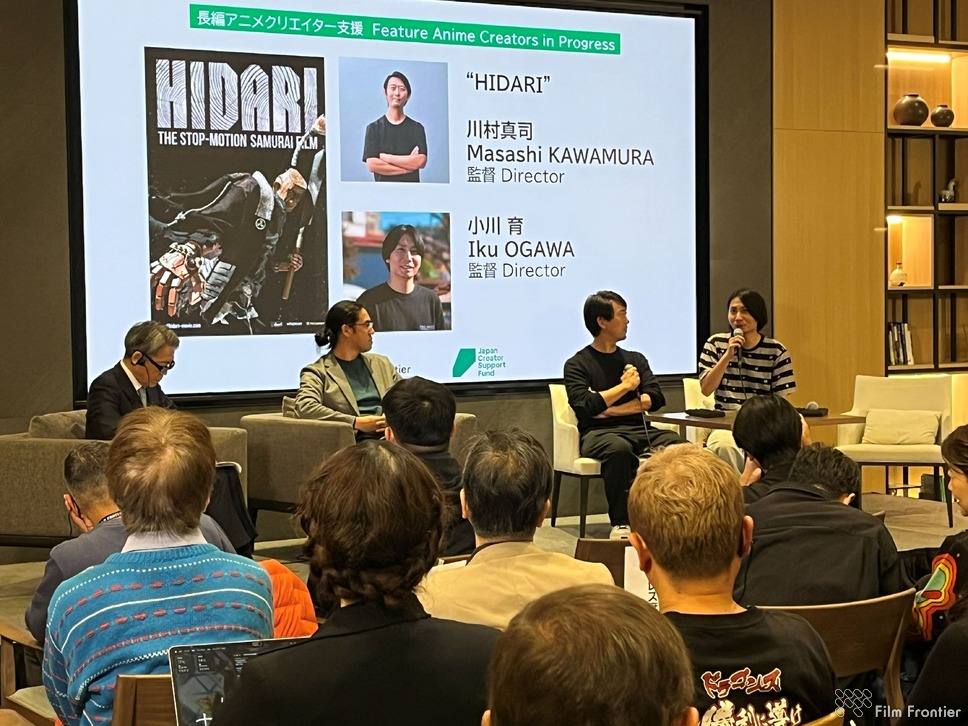
Next, director Masashi Kawamura and co-director Iku Ogawa of the stop-motion animation project HIDARI reported on how Film Frontier's support had enabled them to carry out essential development activities and participate in key industry events. These included a presentation at Cannes Animation, held as part of the Marché du Film, and participation in the MIFA during the Annecy International Animation Film Festival.
They also shared the story behind Keanu Reeves's involvement in the project, following the announcement in Cannes that he would join the film as a voice actor.
In a closing conversation with Jeune, the animation directors exchanged views on how to engage with AI, prompted by Shinomiya's experience of being asked about AI at every festival he attended.
Asked what makes film festivals special, Jeune highlighted the encounters and exchanges they foster, as well as their role in film education. Ultimately, however, he emphasized that the true essence of film festivals lies in the shared experience of watching films together.
Contact
UNIJAPAN – International Promotion
Email: office@unijapan.org
Tel: +81-3-6226-3022